(TALKAMOO) -- Al-Shabaab, an al Qaeda-linked militant group based in Somalia, claimed responsibility for the deadly attack at Kenyan mall on Saturday. Here is a Q and A that looks at this group:
What is Al-Shabaab and what are its aims?
Al-Shabaab is a Somalian
group that was designated as a foreign terrorist organization by the
U.S. government in March 2008. It is seeking to turn Somalia into a
fundamentalist Islamic state, according to the Council on Foreign
Relations, which published a backgrounder on the group in July.
The group is believed to
be responsible for attacks in Somalia that have killed international aid
workers, journalists, civilian leaders and African Union peacekeepers.
It has struck abroad, too. It was responsible for the July 2010 suicide bombings in Kampala, Uganda, that killed more than 70 people, including a U.S. citizen, as they gathered to watch a World Cup final soccer match
.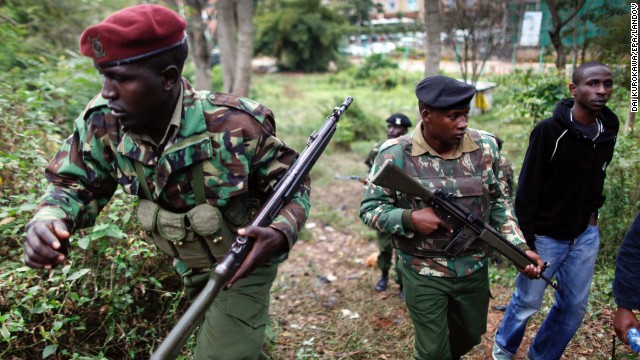 Photos: Kenya mall attack
How big is it?
The total size of the group is not clear.
A U.S. official who
declined to be identified because of the sensitivity of the information
said in 2011 that Al-Shabaab was estimated to control up to 1,000
fighters in the country.
A U.N. report identifies one insurgent leader who is "believed to command an estimated force of between 200 and 500 fighters," most of them Kenyans.
And it has links to
other groups. In February 2012, the group's leader, Ahmed Abdi
aw-Mohamed, and al Qaeda leader Ayman al-Zawahiri released a video
announcing the alliance of the two organizations.
Though Al-Shabaab's size may be in doubt, its potential for sowing terror is not.
"I would say that the
greatest risks right now in East Africa are Al-Shabaab and the violent
extremists that they represent," said Gen. Carter Ham in 2011, when he
was commander of the U.S. Africa Command.
security analyst: Kenya, Westerners high on Al-Shabaab's list
Al-Shabaab's origins
Decades of weak government amid grinding poverty have long made Somalia a target for radical Islamist groups.
Al-Shabaab's predecessor
was al-Ittihad al-Islami (AIAI), which worked to create an Islamist
emirate in Somalia. It was, in part, funded by former al Qaeda leader
Osama bin Laden, according to the Council on Foreign Relations.
AIAI, which the U.S.
State Department designated as a terrorist organization, strengthened
after the fall in 1991 of Siad Barre's military regime and amid the
years of lawlessness that ensued.
In 2003, a rift erupted
between IAIA's old guard -- who were seeking to establish a new
political front -- and its younger members (Al-Shabaab, which means "the
youth"), who were seeking to establish fundamental Islamic rule.
That led the latter to
ally with a group of sharia courts -- the Islamic Courts Union (ICU) --
that was seeking to impose order over a landscape marked by feuding
warlords in the capital city.
Working together, the
ICU and Al-Shabaab succeeded in 2006 in gaining control of Mogadishu.
That sparked fears in neighboring Ethiopia that violence would spill
over there, according to the Council on Foreign Relations.
Those fears -- combined
with a request from Somalia's transitional government -- led Ethiopian
forces to enter Somalia in December 2006 and to remove the ICU from
power.
That move proved to be a
turning point, one that radicalized Al-Shabaab, which attacked
Ethiopian forces and gained control of parts of central and southern
Somalia, according to a 2011 case study by Rob Wise, who was then with
the Counterterrorism Program at the Center for Strategic and International Studies.
What is Al-Shabaab's relationship with Kenya?
In 2011, the Kenyan government ordered a cross-border incursion
intended to create a security buffer zone in southern Somalia after
attacks on tourist destinations in northern Kenya that it blamed on
Al-Shabaab. More recently, Ethiopian troops crossed the border and
expelled Al-Shabaab from Baidoa, a strategic town midway between the
Ethiopian border and Mogadishu.
The group then targeted
African Union soldiers and government buildings in the capital in
suicide attacks. A suicide bombing in March 2012 killed five people at
the Presidential Palace.
Analysts say tension
appears to have been growing within Al-Shabaab between Somalis and
foreign fighters, several hundred of whom are thought to have entered
Somalia in recent years to join the group.
There may also have been
disagreement within the group about the announcement in February 2012
of an alliance between Al-Shabaab and al Qaeda and about the group's ban
on foreign aid organizations working in Somalia to save millions
threatened by famine.
How and from where does it recruit?
The organization has a sophisticated public relations arm that includes a Twitter account and video production abilities.
"Remember Mumbai?" one
tweet asked Saturday, as gunfire was erupting from Westgate mall in
Nairobi. The comment was an apparent reference to the 2008 attack in
which 10 Pakistani men associated with the terrorist group
Lashkar-e-Tayyiba stormed several buildings in Mumbai, India, killing
164 people over a three-day period.
"Some youngsters resist death even when told not to be taken alive. It's going to be a long ordeal," Saturday's tweet said.
Soon after, it announced
it was responsible for Saturday's attack in Nairobi, Kenya. "Alshabab
confirms its behind the #Westgate spectacle," it said.
A 2009 Al-Shabaab video
is as slickly produced as a reality TV show, complete with a hip-hop
jihad voice and a startling message.
"Mortar by mortar, shell
by shell, only going to stop when I send them to hell," an unidentified
voice raps on the video in American English.
The video shows a man
reported to have been Abu Mansoor al-Amriki, a U.S. citizen from
Alabama. "Away from your family, away from our friends, away from ice,
candy bars, all those things is because we're waiting to meet the
enemy," he says.
But enemies -- and alliances -- can shift.
Al-Amriki, whose real
name is Omar Hammami, said last year in a video posted online that he
had had a fallout with Al-Shabaab "regarding matters of the sharia and
matters of strategy" and feared for his life. He was reported last week
to have been killed in Somalia by Al-Shabaab. CNN is not able to confirm
the report.
Finding replacements may not be hard.
Sheikh Ahmed Matan, a
member of Britain's Somali community, said he knows of hundreds of young
Somali men living in the West who returned to Somalia for terrorist
training.
How is it funded?
The once ragtag Somalia-based al Qaeda affiliate has
grown into an economic powerhouse, raising tens of millions of dollars
in cash from schemes that have involved extortion, illegal taxation and
other "fees," according to the 2011 United Nations report.
The United States
believed then that the group was coordinating with al Qaeda groups in
Yemen and might have been plotting attacks in the region and abroad.
In 2011, it was
generating "between $70 million and $100 million per year, from duties
and fees levied at airports and seaports, taxes on goods and services,
taxes in kind on domestic produce, 'jihad contributions,' checkpoints
and various forms of extortion justified in terms of religious
obligation," according to the report from the U.N. Monitoring Group on
Somalia and Eritrea.
How have Somalis been affected?
Years of lawlessness and
poverty have exacted a toll that Al-Shabaab has not helped. In 2011,
the United Nations declared a famine in the southern Somalia regions of
Bakool and Lower Shabelle, and Al-Shabaab reversed an earlier pledge to
allow aid agencies to provide food in famine-stricken areas.
That year, the U.N. Interagency Group for Child Mortality Estimation announced that Somalia had the highest mortality rate for children 4 and younger in the world.
In May, a report jointly
commissioned by the U.N. Food and Agriculture Organization and the
USAID-funded Famine Early Warning Systems Network reported that 258,000
Somalis had died in the famine between October 2010 and April 2012 and
that half of the victims were younger than five.
What is the United States doing?
The United States has
supported U.N.-backed African forces fighting Al-Shabaab and
strengthened its counterterrorism efforts against the group.
It has also donated millions in aid.
The U.S. State
Department said this week that Somali security forces, aided by the
African Union Mission in Somalia, have driven Al-Shabaab out of major
cities and towns, creating "a window of opportunity to fundamentally
change Somalia's trajectory.
What is the status of Somalia's government today?
In September 2012,
Somali parliament members selected Hassan Sheikh Mohamud as the new
president in a vote that marked a milestone for the nation, which had
not had a stable central government since Barre's overthrow 21 years
before.
That did not mean
Al-Shabaab was calling it quits. In January, French forces attempted to
rescue a French intelligence commando held hostage in Somalia by the
group. The raid left the soldier dead, another soldier missing and 17
Islamist fighters dead.
But there has been political progress there.
In January, for the
first time in more than two decades, the United States granted official
recognition to the Somali government.
No comments:
Post a Comment